
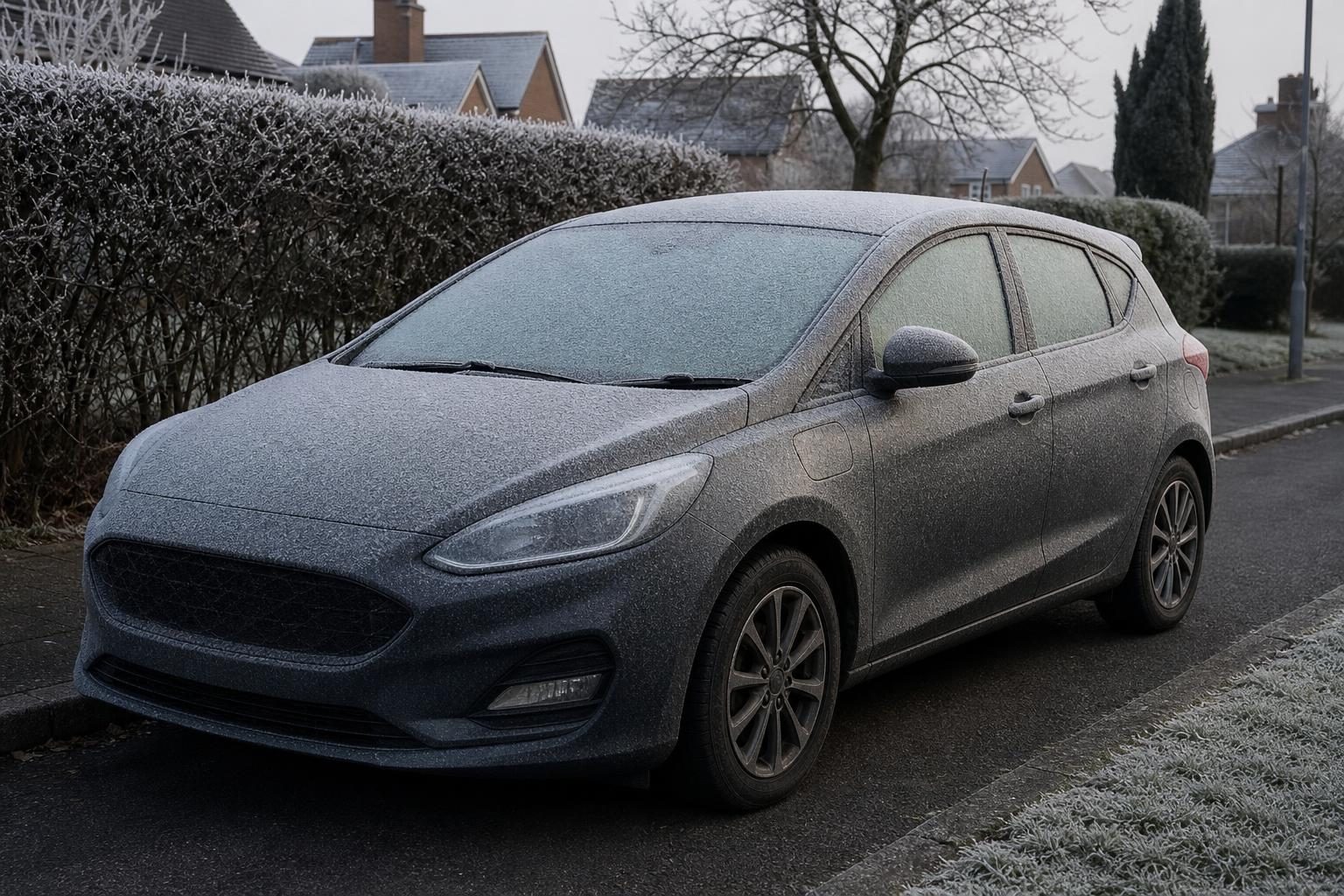
The short answer
Cold weather genuinely hurts fuel economy, battery reliability and EV range, and the effects are bigger than most drivers expect. A petrol car can use up to 24% more fuel on short winter runs, a flat 12-volt battery is the single biggest cause of UK winter breakdowns, and an electric car can lose 20 to 30% of its real-world range on a typical cold British day. Most of the damage is preventable with free or very cheap habits.
What it is, in plain English
Winter does three separate things to your car. It makes your engine or motor work harder to get going. It weakens the battery that starts the car. And if you drive an electric vehicle, it diverts energy away from the wheels to heat the cabin.
These are not myths or excuses from manufacturers. They are basic physics, and the data from the RAC, the AA and independent testers back them up.
How it works
Petrol and diesel economy
The official economy figure on your car, the WLTP number quoted in brochures and on the manufacturer’s website, is measured in a laboratory at around 23 degrees Celsius. Real-world winter driving is nothing like that.
US Department of Energy test data show that a conventional petrol car uses roughly 15% more fuel in city driving at around minus 7 degrees Celsius compared with a warm day, and that figure can reach 24% worse on short trips of three to four miles. These are physics-based findings, not US-specific rules, so the same effects apply to UK driving in cold conditions.
The causes are straightforward. Cold engine oil and gearbox fluid are thicker, so the engine has to work harder just to turn over. The engine takes longer to reach its most efficient operating temperature, and on a short run it may never get there at all. Add the heater fan, heated seats and rear screen demister, and the total load climbs further. Sitting on the drive warming the car up makes it worse still, because a stationary engine produces zero miles per gallon.
Tyre pressure also falls in cold weather, roughly 1 to 2 PSI for every 10-degree drop in temperature. Underinflated tyres alone can cause up to 5% worse fuel economy, on top of reducing grip on icy roads.
If you drive a hybrid, the hit is bigger. Hybrid fuel economy can drop around 30 to 34% in cold city driving because the electric motor is less effective in low temperatures, so the petrol engine carries more of the load.
Diesel drivers have one extra thing to know. Diesel fuel can wax or gel in very cold weather, forming solid particles that block fuel filters and injectors. Reputable UK filling stations switch to winter-grade diesel with additives to prevent this, so most drivers will not encounter it, but it is worth being aware of if you are filling up somewhere unusual in a cold snap.
The 12-volt battery problem
This is the one that actually strands people.
The AA identifies battery problems as the top cause of cold-weather breakdowns, and the AA responds to more than 270,000 breakdowns in January alone in an average year. The RAC tells a similar story. On the first Monday of 2025, flat batteries accounted for 24% of all RAC callouts, and the RAC had predicted a record 12,000 breakdowns on 2 January 2024, with 28% of those expected to involve flat batteries.
The reason is blunt. Cold temperatures can reduce battery capacity by 50 to 60% while simultaneously increasing the power needed to turn a cold, stiff engine over. If the battery is already a few years old and a bit tired, that combination finishes it off.
EV drivers are not exempt. The RAC notes that most electric vehicles also carry a 12-volt battery, and an EV that sits unused for weeks over Christmas can fail to start for exactly the same reason as any petrol car.
EV range loss
The WLTP range figure on an electric car is measured at around 23 degrees in a laboratory. In mild real-world UK conditions, most EVs already return 20 to 30% less than that figure. Cold weather adds a further reduction on top.
At 0 to 5 degrees Celsius, typical for a British winter, most modern EVs lose between 10 and 30% of their real-world range. Below freezing, or on short journeys from a cold soak, the loss can reach 30 to 40%. The range returns when temperatures rise in spring, and cold weather does not cause permanent damage to a modern lithium-ion battery pack.
The main villain is cabin heating, not battery chemistry. The difference between a car that loses 12% in the cold and one that loses 35% comes down mainly to whether it has a heat pump and how well its battery thermal management system works. A heat pump moves heat from the outside air rather than generating it from scratch, preserving roughly 5 to 10 percentage points of range near freezing.
Real-world test data illustrate the spread. The Auto Express 2026 winter range test found the Mercedes CLA achieved 303 real-world miles against a 484-mile WLTP claim, the Tesla Model Y managed 220 miles against a 314-mile claim, and the Kia EV4 returned 241 miles against 388 miles. In a 2025 Norwegian El Prix test of 24 EVs driven over the same route in winter conditions, the Polestar 3 came closest to its claimed figure, falling just 18 miles short, while the Tesla Model 3 Long Range dropped 106 miles.
Does it affect you?
Yes, regardless of what you drive. Petrol and diesel drivers feel it most on short urban journeys. Hybrid drivers get the biggest percentage hit to fuel economy. EV drivers lose meaningful range, particularly on longer trips or cold-soak starts. Anyone with a car battery over four years old is at real risk of a non-start.
If you mostly do short local runs in winter, every one of these effects is amplified. Short trips are the worst case for fuel economy and the hardest on the battery.
For a broader look at how running costs compare across fuel types, see our guide: Petrol, hybrid or electric: compare your real running costs.
What it costs
The fuel economy hit translates directly into more trips to the pump. A 15 to 24% increase in fuel use on a car averaging 40 mpg in town could push real-world consumption to the equivalent of roughly 30 to 34 mpg for the coldest months.
If you need a new 12-volt battery, the RAC puts the average UK replacement cost at £253 based on actual job data from October to December 2025. Typical ranges vary by battery type: standard lead-acid units run from around £80 to £120 fitted, Enhanced Flooded Batteries for stop-start cars from £120 to £170, and AGM batteries for more demanding stop-start systems from £160 to £250. These are typical ranges, not fixed quotes. Get at least two prices before committing.
A roadside callout because you did not catch a failing battery will cost more than the battery itself, plus the inconvenience of being stuck.
Common myths and misunderstandings
“You should warm the car up on the drive for ten minutes before setting off.” This is outdated advice for modern engines. Idling uses fuel at zero miles per gallon and does not warm the engine as quickly as gentle driving does. Clear the windows, set off gently and the engine will reach operating temperature faster.
“WLTP range is what I should expect in winter.” No. WLTP is measured at around 23 degrees in a lab. In winter, real-world economy and EV range will be noticeably lower. Treat the WLTP figure as a best-case comparison tool, not a promise.
“Cold weather permanently damages EV batteries.” It does not. The range loss is temporary. When temperatures rise, the range comes back. Cold weather has no bearing on long-term battery health in a modern EV.
“Only old bangers get flat batteries in winter.” Not true. Even relatively new cars can suffer if the battery has been weakened by lots of short trips, long periods sitting unused, or heavy electrical loads. The RAC advises testing any battery over four years old.
What is still unknown or changing
Newer EVs with heat pumps and improved battery thermal management are narrowing the winter range gap, but there is no industry-standard cold-weather range test yet. WLTP does not include a winter cycle, so buyers still have to rely on independent tests and real-world reports to judge how a specific model performs in the cold.
Whether the UK government or European regulators will introduce a mandatory cold-weather range disclosure for EV buyers remains to be seen. For now, independent tests like the Auto Express megatest and the Norwegian El Prix are the best benchmarks available.
What to do next
All drivers:
- Check your tyre pressures. Cold drops them by 1 to 2 PSI for every 10-degree fall. Top them up to the figure on the door sill sticker, not the summer level you remember.
- If your 12-volt battery is over four years old, get it tested before winter bites. Most garages, the RAC and the AA offer battery checks. You can book a battery check or replacement through the RAC.
- Stop idling to warm up. Clear the screen, set off and drive gently.
- Take the car for a proper drive at least once a week if it mostly sits unused. A decent run charges the battery. Simply starting the car briefly and switching it off again can drain it further.
EV drivers:
- Precondition the cabin while the car is still plugged in. This uses mains electricity instead of battery charge and can save 5 to 10% of range.
- Use seat and steering wheel heaters instead of blasting the cabin heater. They draw far less energy.
- Keep the high-voltage battery above 20% charge in cold conditions, as the RAC recommends.
- Remember your EV has a 12-volt battery too. If the car sits for weeks, it can go flat just like any other car.
Winter costs every driver a bit more money and a bit more attention. The good news is that the biggest savings come from free habits, not expensive fixes.

